GIZ Supports Fast-tracking the AfCFTA Services Liberalisation through the Development of a Web-based Negotiation Portal
-
The assignment serves as launching pad of the services offer exchanges through the compliance assessment vis-à-vis the AfCFTA services liberalisation modalities
The review was conducted for 32 African Union members
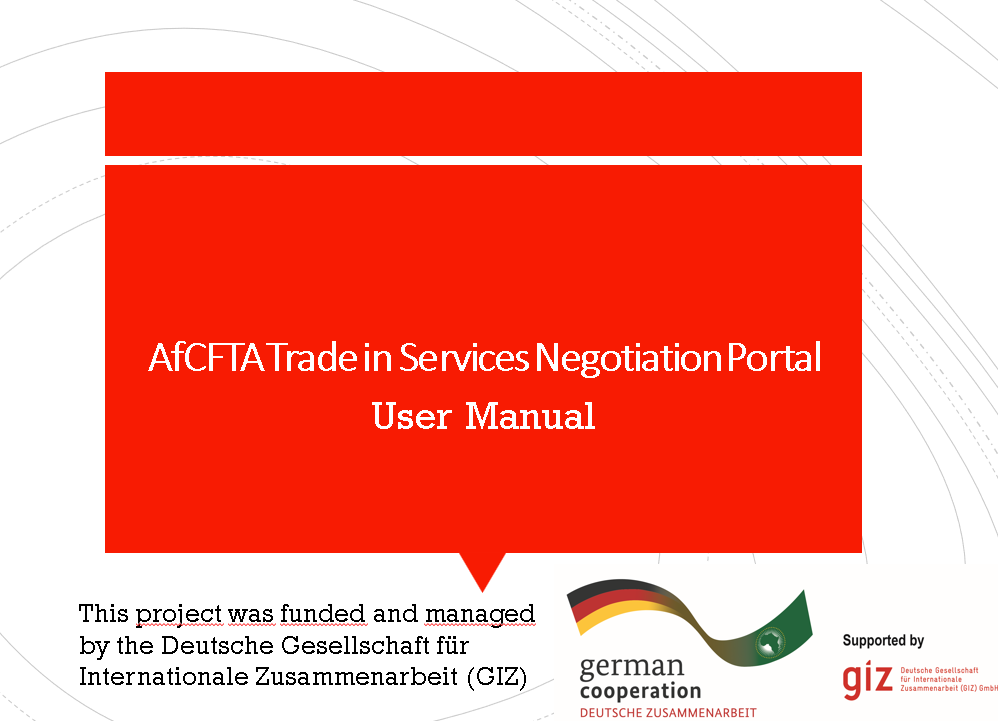
The assignment also developed a user guide for a web-based AfCFTA services offers exchange platform

Xaver Keller, Head of Component, GIZ African Union Office
« I thank Astove Conseil for successful cooperation and I am pleased to say that the main objectives of the project were successfully achieved to the satisfaction of all parties concerned. [...] The team was able and willing to flexibly react to the changing circumstances for a successful conclusion of the assignment under. »
Summary
The AfCFTA services portal development creates a platform for inter-sessional negotiations, allowing progress to be made between meetings. The standardised digital environment is a web-based application, where State Parties can exchange offers, develop schedules of specific commitments, and track progress against agreed modalities.
The development of a specialised negotiation platform for AfCFTA services aimed to bring about a fundamental shift in how African Union Member States approach trade liberalisation.
This technological solution addresses a critical issue in continental trade integration: the complexity of coordinating negotiations among 54 African Union Member States across multiple service sectors.
The portal development process recognises that effective trade facilitation requires more than policy agreements—it demands practical tools that make complex legal frameworks accessible to negotiators at the national level.
The AfCFTA services portal development initiative was initiated through collaboration between the Deutsche Gesellschaft für Internationale Zusammenarbeit (GIZ), the African Export-Import Bank, and the African Union Commission, creating a model for how external technical assistance can support African-led integration initiatives.
Strategic outcome
The documentation addresses the practical challenges that negotiators face when transitioning from traditional negotiation methods to digital platforms, ensuring that technological innovations enhance, rather than complicate, the negotiation process.
Key outcomes from this partnership include the development of comprehensive user manuals that enable Member States to effectively navigate portal functionalities without requiring extensive technical training.
Perhaps the most significant outcome of the AfCFTA services portal development is its impact on trade in services negotiations, which have traditionally been one of the most complex areas of trade policy. The portal facilitates a systematic comparison of initial offers against existing WTO GATS commitments, enabling negotiators to identify opportunities for enhanced liberalisation while maintaining appropriate policy space.
The analytical framework developed through the portal initiative reviewed multiple Member State offers across critical indicators, including sectoral coverage, horizontal commitments, market access limitations, and classification systems. This systematic approach to offering analysis demonstrates how digital tools can transform qualitative negotiation processes into quantifiable metrics that support evidence-based decision-making.
Notable achievements include the successful review of offers from countries such as the Comoros, Democratic Republic of the Congo, Egypt, Eswatini, Madagascar, Mauritius, Namibia, Seychelles, South Africa, and Zambia. Each review assessed whether initial AfCFTA offers exceeded GATS commitments, providing Member States with clear benchmarks for measuring their continental integration ambitions.
Recognising Africa's linguistic diversity, the AfCFTA services portal development prioritised multilingual functionality to ensure broad accessibility across francophone and anglophone Member States. The creation of French translations for all portal documentation reflects an understanding that the success of continental integration depends on inclusive participation rather than linguistic barriers.
Supporting AfCFTA services offers capacity development
The capacity-building component extended beyond technical training to address systemic challenges in trade negotiations. Training programmes targeted not only immediate portal users but also institutional knowledge transfer mechanisms that ensure sustainable expertise development within Member State administrations.
The AfCFTA services portal development framework accommodates existing Regional Economic Community arrangements while facilitating broader continental integration. The system processes offers from regional blocs, including ECOWAS and EAC, alongside individual country submissions, recognising that African integration operates through multiple, overlapping frameworks.
GATS vs AfCFTA initial services offer
This approach reflects a sophisticated understanding of African integration dynamics, where regional arrangements serve as building blocks for continental agreements rather than competing alternatives. The portal's ability to handle both individual and collective offers demonstrates technical flexibility that matches the political complexity of African trade integration.
The portal development process established robust quality assurance mechanisms that ensure offers comply with agreed AfCFTA modalities while maintaining high standards for legal and technical accuracy. The review framework assesses offers against multiple criteria, including GATS-plus commitments, sectoral coverage, and consistency in classification.
This systematic approach to compliance monitoring represents a significant advancement over traditional negotiation processes, where offer quality often varied significantly across Member States. The AfCFTA services portal development creates standardised review procedures that enhance the overall quality of continental trade commitments while reducing the burden on negotiators.
Fostering the GIZ x AUC partnership
Beyond the immediate negotiation context, the AfCFTA services portal development creates infrastructure that supports the broader goal of facilitating cross-border service trade across Africa. The portal's emphasis on clear commitment schedules and transparent market access conditions provides businesses with the certainty necessary for strategic investment decisions.
The systematic documentation of service sector commitments through the portal creates a comprehensive database of continental trade opportunities, informing business development strategies across multiple sectors. This business-facing dimension of the portal demonstrates how trade negotiation tools can generate value beyond the immediate policy context.
The success of the AfCFTA services portal development offers valuable insights for other regional integration initiatives considering the digital transformation of trade processes. Key lessons include the importance of comprehensive user training, multilingual documentation, and flexible technical architecture that accommodates diverse national systems.
The emphasis on collaborative development, involving technical experts, institutional users, and policymakers throughout the design process, proved essential for creating tools that meet practical negotiation requirements rather than theoretical specifications. This participatory approach to portal development ensures that technological innovations support rather than constrain negotiation flexibility.

Read other stories featuring