

WCO x Astove Conseil

The Regional Integration and Development Division is dedicated to safeguarding Seychelles' strategic interests and advancing its foreign policy through proactive and focused diplomatic efforts in the region.
It oversees the country's objectives for regional integration within the framework of Regional Economic Communities (RECs) such as SADC, COMESA, COI, and IORA. Additionally, it coordinates the negotiation and implementation of economic integration agreements established under the auspices of these organisations.
In a nutshell
-
ESA-EU EPA desk officer
COMESA NTB focal point
Rules of origin negotiation specialist
-
3 administrative cooperation agreements for origin cumulation purposes under the ACP-EU EPAs
Resolution of bilateral trade dispute with Kenya
Negotiation of € 1 mo technical assistance agreement for EPA implementation
-
Seychelles’ trade diplomacy profile enhanced, including through preparation and participation in COMESA-SADC-EAC TFTA and AfCFTA negotiations, and ESA-EU modernisation negotiations
Secured an 1M€ EPA implementation assistance programme
“Mr. Gérout [Suominen] has no doubt contributed to the leading, forward-looking and open-minded stance that Seychelles has shown in pushing for an acceleration of the EPA negotiations within the ESA region.”
Amb. Barry Faure, Secretary of State for Foreign Affairs, Seychelles Ministry of Foreign Affairs

Summary
Legal and policy reforms
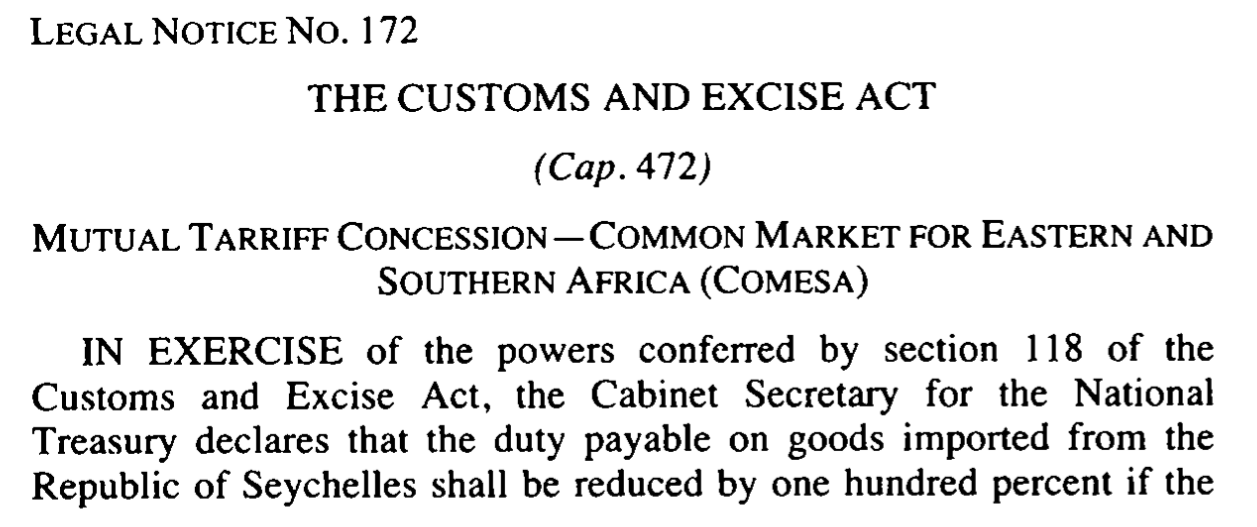
Legal notice under Kenya Gazette extending COMESA regime to Seychelles originating products

Foreign Minister of Ghana, Dr. Tetteh, and Foreign Minister of Seychelles, Mr. Adam, signing bilateral administrative cooperation agreement
Knowledge product
The 2016 pilot study examines the applicability of cumulation provisions under the Economic Partnership Agreements (EPAs), using the Seychelles–Ghana Administrative Cooperation Agreement (ACA) as a case study. Cumulation is a rule designed to enhance intra-African trade and value chains by allowing African countries to source materials from other African nations while still maintaining preferential treatment for their final products. However, this provision often depends on the establishment of administrative cooperation arrangements.
While Seychelles and Ghana signed an ACA to facilitate this process, progress has been hindered by various challenges, particularly the parties' commitment and the European Union’s requests for amendments. The study emphasises that merely having cumulation provisions is not enough; effective administrative mechanisms must be in place to ensure implementation. Without these mechanisms, both countries have been unable to benefit from the agreement fully.
Additionally, the document discusses the All-ACP Joint Undertaking (JU), a multilateral initiative aimed at meeting administrative cooperation requirements. It notes that Ghana has not endorsed the JU, raising concerns about its enforceability. An addendum to the study indicates that Ghana signed the Stepping Stone EPA in July 2016, which includes a different set of rules of origin that may impact the study's findings.
Meet the expert
-

Guillaume Gérout Suominen
Strategic advisory, technical assitance & knowledge management
Team leader & Trade negotiation expert